Is it possible to redesign everything we make to be in harmony with nature? ‘Yes’, say creatives and entrepreneurs from around the world, as they answer the call of the Redesign Everything challenge
For many of us, conversations about recycling can be reduced to what can and can’t be put in a weekly collection bin. But to solve the plethora of issues contributing to the climate crisis, we need to be much bolder.
That’s the ethos behind this year’s Redesign Everything Challenge, run by the international organisation What Design Can Do. More than 500 designers answered the call in the form of their most creative climate solutions, redesigning everything from electronics to clothing.
Here are just four of the 11 winners:
Tackling incoming textile waste – The Revival
For social entrepreneur and co-founder of The Revival, Yayra Agbofah, clothes are a “second skin”. He explains: “I think clothing is beyond fabric, it’s a part of you. If something is your second skin – because of its close proximity to your skin, your soul, your heart – then you should have a relationship with it. That’s what’s missing in our industry right now. We just buy and consume and throw away.”
Fast fashion is a global challenge. In Ghana, where Agbofah is based, 15m garments arrive every week, of which 40% end up as waste. The scale of the issue can feel overwhelming: the country’s landfills are overflowing, harmful chemicals seep into the waterways and air pollution rises as waste is burned.
It’s why Agbofah and his co-founder Kwamena Dadzie Boison set up The Revival, an organisation they call “a declaration against the unsustainable practices of the fashion industry”.
They’ve already saved 1m items from landfill through upcycling programmes, which focus on education, awareness and art. Helping participants to understand the process and to feed into designs is crucial, says Agbofah: “That’s where ownership comes in. The pride is there.”
But while he has big plans for The Revival’s future, he’s under no illusions about the challenges ahead: “It’s all hands on deck. That’s the only way we can win this fight. And you need to make sacrifices.”
Images: The Revival
Building marine habitats – Reef Rocket
Designer Mary Lempres describes her childhood in northern California as being surrounded by nature: “I was always looking at oysters and clams and how they fix themselves to rocks. It was just amazing, because they were getting smashed by waves and salt water is so corrosive. I’d think: ‘How is nature able to do this?’”
“I’ve always pulled a lot of inspiration from there,” she says. It’s now led to the creation of Reef Rocket, a spaceship-shaped structure that’s designed to mimic oyster reefs. The structures are made from a unique ‘concrete’ that’s created using plant enzymes. It also includes real oyster shells, collected as waste from local restaurants.
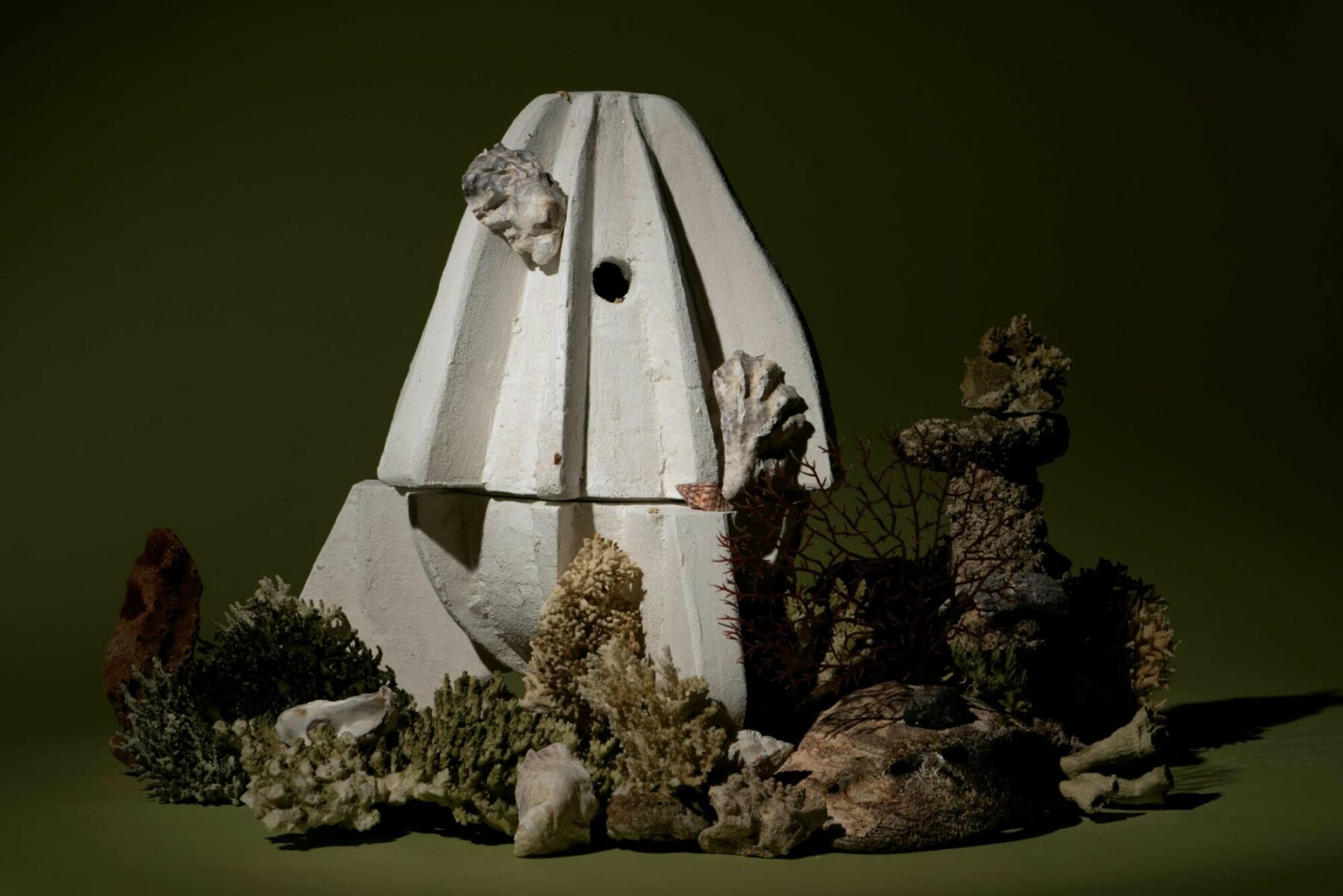
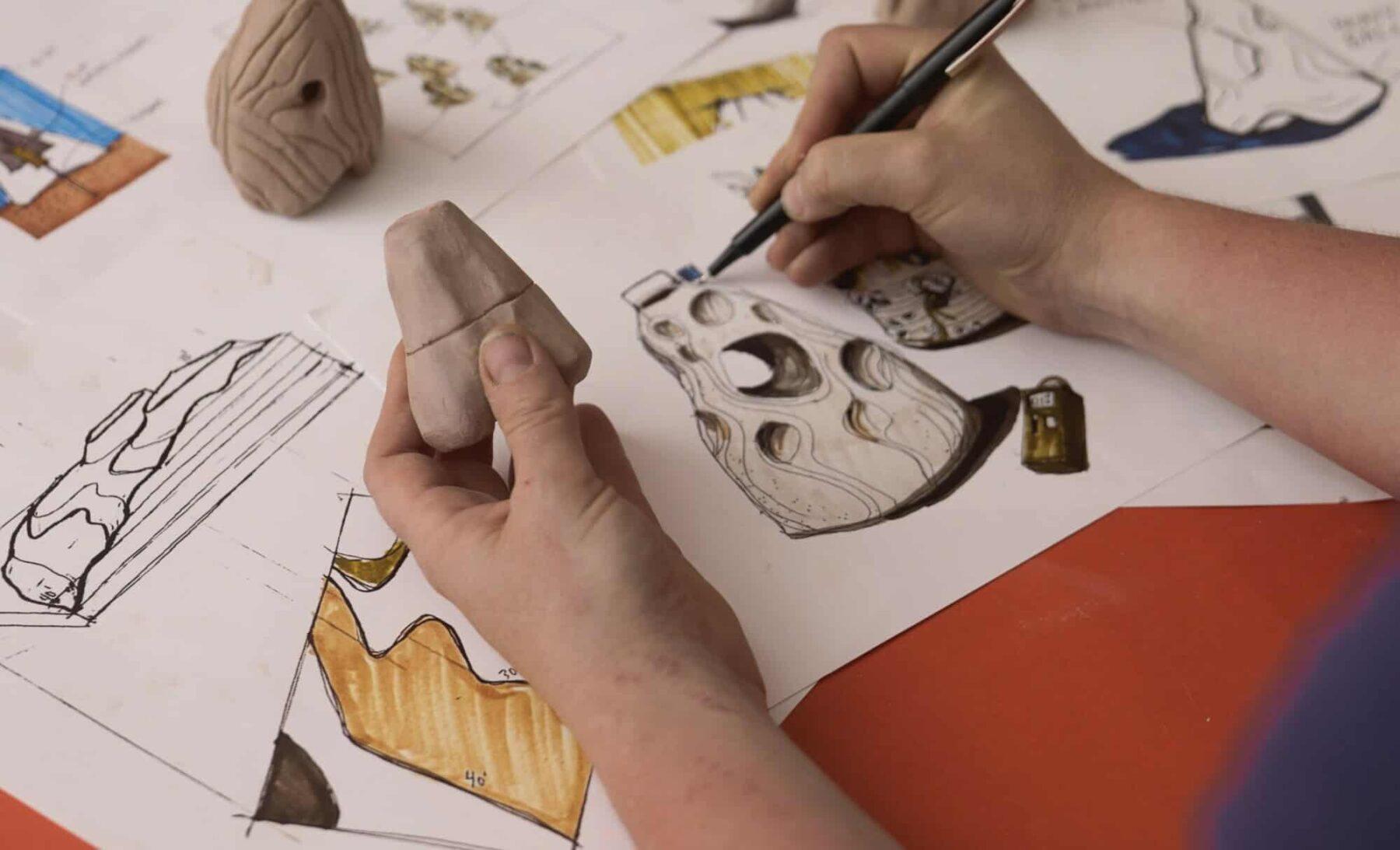
Once placed into the water, it imitates the natural reefs that oysters would have grown themselves over millennia: the oyster can attach to Reef Rocket just as it would a natural reef and continue to grow the structure.
“The ideal medium to restore oysters is oyster shells,” Lempres explains, “because they grow their reefs by attaching to other shells. There’s so much genius in nature all around us. It’s just about looking at the research and development nature has already done for us.”
There’s so much genius in nature all around us. It’s just about looking at the research and development nature has already done for us
Currently running in a small-scale trial in New York Harbor, the idea is to regenerate depleted natural habits. In turn, this helps to combat flooding and coastal erosion, while oysters themselves filter the water. The reefs also serve as a unique structural habitat for fish, increasing biodiversity.
For Lempres, the solution always has to be bespoke to the local context: “The idea is to think on a global scale about these global challenges, while intentionally and very specifically solving problems on a local scale.”
Images: Reef Rocket
Relieving period poverty – Looop Can
“Looop Can is essentially like a mini washing machine, a mini cleaning device,” explains one of the startup’s co-founders, Margaret Wu. “It limits the amount of resources, space and water that are needed to wash a reusable [sanitary] pad in a conventional setting.”
The small orange can, which costs around £5 to make, can wash a reusable sanitary towel with as little as 500ml of water, using just buoyancy force (the upward force a fluid exerts on any object), soaking time and a dash of baking soda.
As well as working in areas where water is scarce, the duo also hope the product can ease financial pressures in refugee camps. With this in mind, the cans are designed to last for at least five years.
For Cheuk Laam, co-founder and product designer, the mission is simple: “We want to create a world where no one has to choose between food or sanitary products. That’s very crucial when it comes to [places with] limited resources. We don’t want that to be a burden.”
Wu hopes it can be the start of a wider movement to empower women, providing education and breaking down stigma, as well as providing reusable products. The team also want to work with providers of existing reusable pads to combine them with Looop Can, as well as explore products for postpartum care. “We’re thinking very, very big here,” she enthuses. “I can envision Looop Can being a well-rounded solution that goes much beyond period poverty.”
Images: Looop Can
Creating compostable devices – Electric Skin
Imagine you never had to charge your phone again. Instead, your devices created their own power, through the biomaterial they were made from, which generated electricity from the humidity in the air. It sounds futuristic, but this is the technology that startup Electric Skin is exploring.
Inspired by a 2020 scientific paper called The Mud Is Electric, the team’s fully compostable designs are powered by a bacteria that naturally produces electrical proteins. It uses pili: the hair-like structures on the bacteria Geobacter sulfurreducens. These proteins form nanowires that can create an electrical charge using the surrounding moisture when linked together.
Since then they’ve been prototyping and growing the protein in a lab. Co-founder Paige Perillat-Piratoine explains: “We’re growing bacteria and extracting just the protein and then dropping that on a material between two electrodes to generate electricity.”
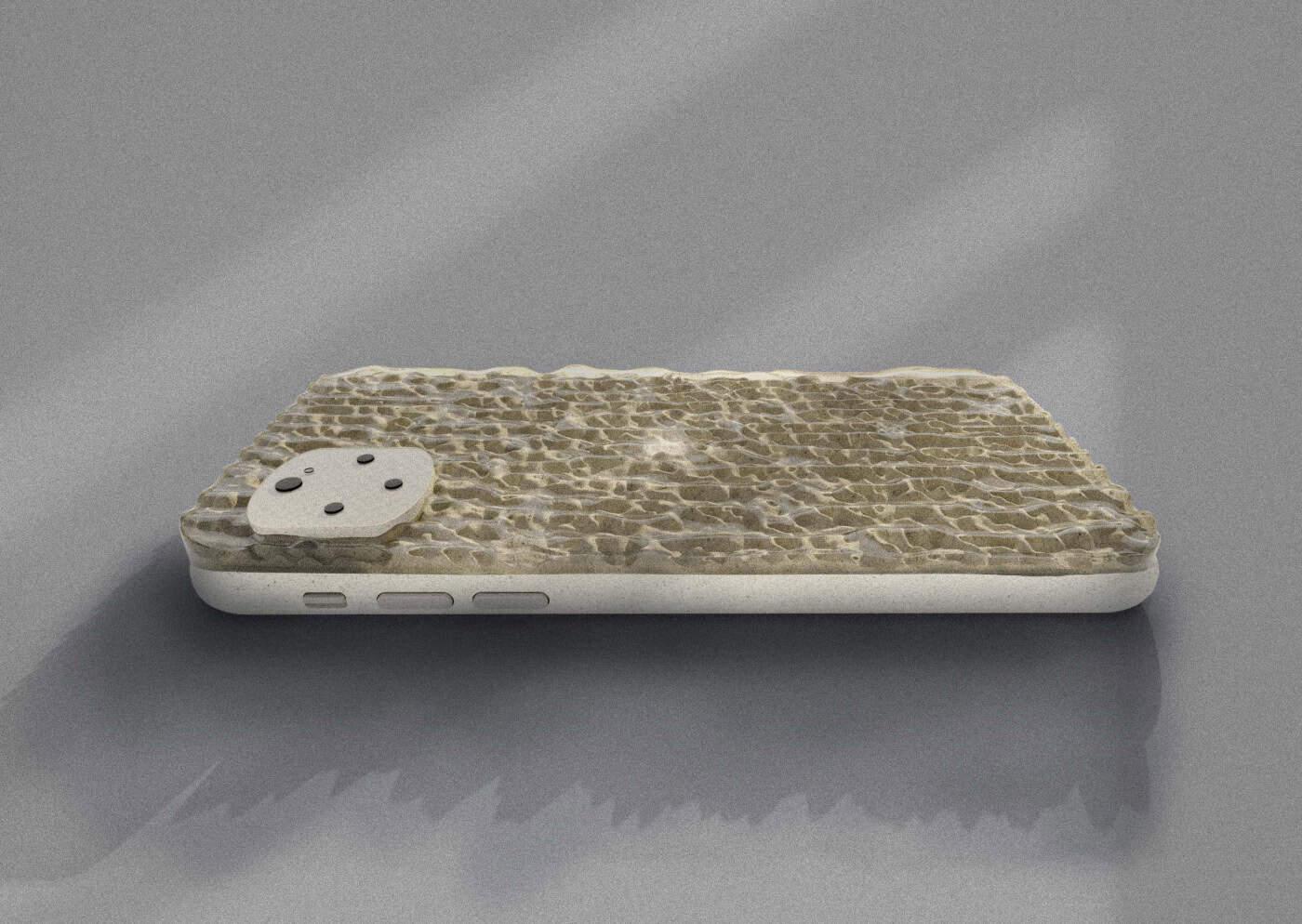
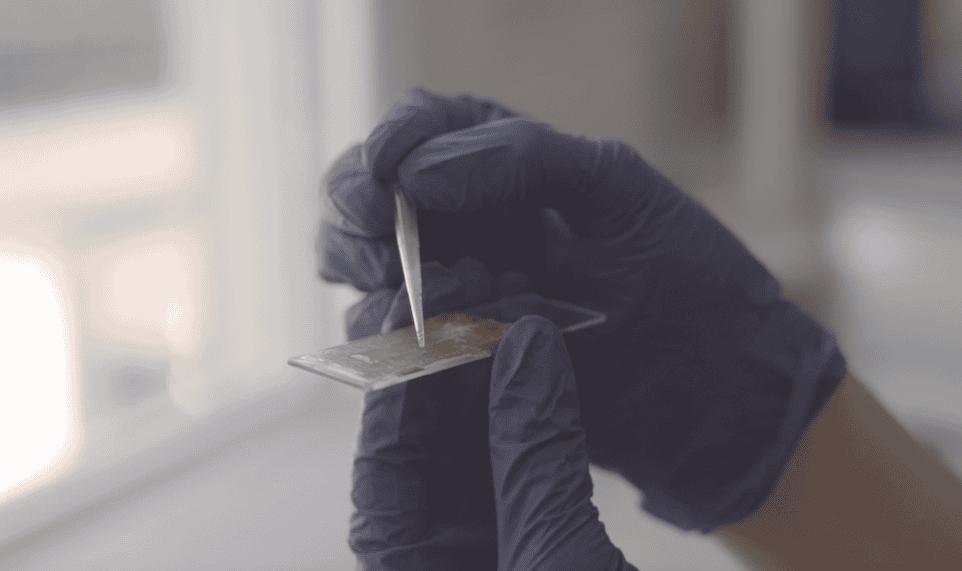
Not only is this material, which they call ‘electric skin’, both growable and compostable, it would also cut out the need for mining metals such as lithium and cobalt, which are widely used in almost all batteries including in renewable tech. This mining industry causes devastating pollution and billions of tonnes of carbon emissions every year.
Although they are still in the research stage, the team sees a future where their creations will not only power electronic devices, but the homes we live in. The answer, they say, comes back to nature: “Central to our design process is that nature, with over 3.8bn years of evolution, knows so much better than us,” says Perillat-Piratoine.
Images: Electric Skin
Main image: The Revival
Help us break the bad news bias
Positive News is helping more people than ever to get a balanced and uplifting view of the world. While doom and gloom dominates other news outlets, our solutions journalism exists to support your wellbeing and empower you to make a difference towards a better future. And as Positive News’ audience and impact grows, we’re showing the rest of the media that good news matters.
But our reporting has a cost and, as an independent, not-for-profit media organisation, we rely on the financial backing of our readers. If you value what we do and can afford to, please consider making a one-off or regular contribution as a Positive News supporter. Give once from just £1, or join 1,000+ others who contribute an average of £3 or more per month. You’ll be directly funding the production and sharing of our stories – helping our solutions journalism to benefit many more people.
Join our community today, and together, we’ll change the news for good.