EDINBURGH Council has granted planning permission for the conversion of Lansdowne House in Roseburn into a new 48-home retirement village.
The initiative, which has been in the works since late last year, will see the former stately home, which most recently used by the St George’s School for Girls, converted into a state-of-the art care home, with some buildings on the site entirely demolished.
Developers say the project will provide Edinburgh’s first “full integrated community of extra care homes”, will provide 100 new construction jobs, add more than £600,000 to the local community per year, and provide 16 full-time jobs when completed.
Locals, however, have objected to the plans, stating that the development may result in demolition or damage of listed buildings, “over-development” of the site, and the removal of listed boundary walls.

The Cockburn Association, Edinburgh’s civic association, similarly objected to the plans, raising significant concerns about the scale and impact of the development, even while acknowledging its social purpose.
The association raised particular concern about the new buildings proposed along Henderland Road and within the grounds, which it said read as modern multi-unit apartment blocks rather than villas, diminishing the listed building’s visual prominence within its landscape.
It also objected strongly to the proposed removal of 29 trees, including several Category A and B specimens, describing these as forming an essential part of the visual and environmental character of the Coltbridge and Wester Coates area.
The association also flagged concerns about traffic and access, noting that Coltbridge Terrace is a narrow street poorly suited to the volume of staff, visitor and service vehicle movements that an extra care community of this scale would generate.
Developers, however, say that “central” to the proposals is a commitment to “protect, conserve and sensitively refurbish the listed buildings” alongside new build elements.
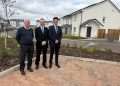
The development is being undertaken by the Vivere Extra Care Group, which was co-founded last year by Scott Curran, an Edinburgh-born architect, Beatrix Lehnert, controlling shareholder in Probitas, and Martin Stephenson, of the Stephenson Group.
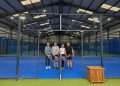
They wish to retain the Category-C listed Lansdowne House and Gatehouse, constructed in the 19th century, while demolishing the more modern, unlisted school buildings – including the tennis courts – and constructing care accommodation.

Although they have been given consent to complete these works, the council has mandated that construction must not commence before Vivere secure implementation of a programme of archaeological work, allowing the history of the buildings to be recorded.
As such, the council’s Development Management Sub-Committee gave the application “minded to approve” consent, rather than unconditional consent.
It is expected that some alterations will have to be made to walls within the site, with a new balustrade installed on top of the old retaining wall south of Landsdowne House. Vivere says that any trees lost will be replanted, with 36 new trees planned.
Scott Curran, co-founding director of Vivere Extra Care Group says: “Vivere Extra Care Group is pleased to have gained a ‘minded to approve’ planning consent from The City of Edinburgh Council for Edinburgh’s first fully integrated community of extra care homes on the 2.2 acre Lansdowne House site.
“We thank The City of Edinburgh Council and members of the local community for working closely with us to help finalise our proposals for the project.”
The centrepiece of the scheme is Lansdowne House itself, a Category C-listed Victorian villa designed in Jacobethan style and originally known as Coltbridge Hall, built in 1875 to designs by architect T.B. McFadzen.
The building passed through the hands of several prominent Edinburgh families before becoming Lansdowne House School in 1945 and then, from 1976, part of St George’s School. It will now revert to residential use for the first time in nearly 80 years.
Vivere plans to fully restore the principal heritage rooms on the ground floor – including the galleried hall, drawing rooms and library – retaining coffered timber panelling, high ceilings and period detailing.
Upper floor rooms will be converted into heritage apartments and the Victorian Gate Lodge will also be retained.
Later-period buildings of lesser architectural merit on the grounds will be demolished and replaced with new-build blocks designed to complement the Victorian character of the main house, alongside reinstatement of the original 1875 sunken garden.
The scheme will also offer a Health Club, including a full equipped fitness-studio, an activity area for classes such as Pilates and Yoga, a physiotherapy treatment room and post-operative services
The on-site management team will support the residents on a day-to-day basis and estate management services will ensure the maintenance of the buildings and grounds.
Residents themselves are expected to add approximately £430,000 to the area annually through local spending and taxes.

Vivere describes the project as a direct response to what it characterises as a significant and unmet demand for age-appropriate housing with round-the-clock care in Edinburgh, offering residents the ability to age in place rather than move into a conventional care home.
Vivere co-founding director Beatrix Lehnert adds: “This is an important step in the provision of much needed extra care housing in Edinburgh.
“Lansdowne is the first of four planned developments we have in the pipeline in Edinburgh over the next five years.
“Our proposals are aligned with the Scottish Government’s ambition to both raise life expectancy in Scotland and the provision of suitable housing and amenities for older people which help to enhance their health and wellbeing.”
The development is the first of four extra care communities Vivere has said it plans to deliver in Edinburgh over the next five years, with the company targeting sites in Edinburgh, the Lothians and Fife capable of providing between 50 and 80 homes each.
Vivere estimates that the development will contribute around £625,000 per year to the local economy through employment and procurement, with residents themselves adding approximately £430,000 annually through local spending and taxes.

Ross Chalmers is a journalist focusing on local Edinburgh news, transport, the environment, the arts, and housing.
He graduated from Edinburgh Napier University with a degree in journalism in Summer 2025 and began working at Deadline News as a reporter in August.